All You Need to Know About Chemical Scarification
All Y'all Need to Know About Chemic Scarification
Scarification by chemical means but ways applying a chemic reaction to wounds that have been generated by some other method (such equally cutting) or that have been produced directly past the reaction.
 In this article, we would hash out what there is to know about Chemical Scarification and its methods. We have also given forth the methods that are used in this process as well equally the chemicals that are used. However, yous have to consult your doctor before leaping into something such as this procedure.
Method of Chemical Scarification
The first method entails the scar'southward blueprint is cut with a scalpel into the flesh. And then, the cut is filled with a chemic irritant, which ensures heavy and raised scarring. Diverse substances, such as soap and formaldehyde, can irritate the skin. The second type of scar is obtained by using a chemical solitary.
As a general dominion, this is done in the following way:
- After shaving, washing, and preparing the scarring area, it is ready to be scarred.
- Patterns are blocked out in negative using water- and chemically-resistant materials on the peel. The best choice may be heavy-duty record (although Saran Wrap, Vaseline, or Vaseline may also be used).
- A chemical is injected into the negative infinite effectually the pattern, resulting in a positive image of the design on the skin.
- A chemic does its piece of work within a 2- to 10-minute time frame. When we are most hurt, this is the time when we feel the near pain.
- Water is either used to rinse off the chemical, or chemically neutralized to remove it.
Chemicals Used In Chemical Scarification
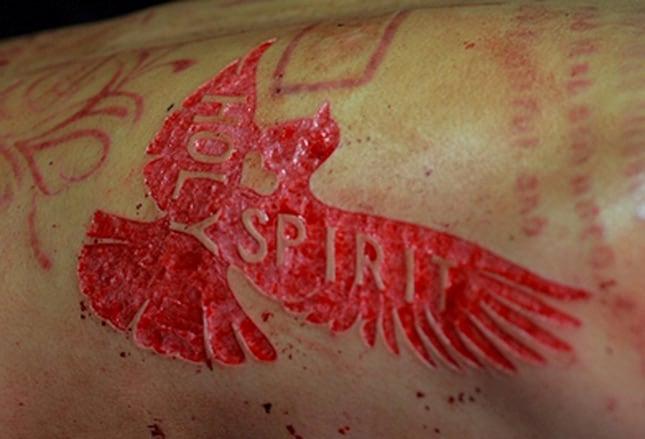
Information technology is extremely of import to choose which chemical is used considering many of them are sufficiently caustic to cause scarring. It may seem obvious, only acids – e.k. HCl (aq) (Hydrochloric acid), H 2 SO four (Sulfuric acid) — and bases — NaOH (Sodium hydroxide, lye, caustic soda; the chemical used in the movie Fight Club ), KOH (Potassium hydroxide) are non suitable for chemical scarification. For an acrid or a base of operations to do their piece of work, they must be dissolved completely in h2o. It is nearly impossible to command how the chemical is placed and spread in such a liquid form.
Using potent acids or bases for chemical scarification also has the drawback of scarring so quickly: on the order of a few seconds when their concentrations are sufficient to cause plenty burns to scar. The advantage of this is that it may seem desirable (pain of shorter duration), simply it also means that if the chemical is not removed in a timely style, it can easily burn far more deeply than anticipated.
To brand matters worse, the chemical must exist neutralized to exist safely removed from the surface area. Even in a test tube, this could be a difficult affair to reach precisely without human aid. When un-neutralized strongly acidic or basic solutions are washed abroad with water, the result volition most probable be chemic called-for across large parts of the body since the h2o volition simply spread the chemical. In addition to being caustic, many acids and bases are toxic.
An alternative would be to use some kind of oxidizing agent. Although they notwithstanding require some water to initiate the reaction, most oxidizing agents don't demand to exist completely dissolved to do their job. Those hydrophobic organisms are therefore relatively easy to control since they can more often than not remain dry. They are also far more resistant to burns than acids and bases, as they piece of work more slowly, and then they can be removed properly with large quantities of water while causing less impairment than acids and bases. The use of chlorine-based oxidizers, such equally those used to disinfect swimming pools, is never recommended because of their toxicity. Among the best choices is AgNO3, which is a non-toxic oxidizer routinely used in newborns' care as a disinfectant.
Considerations During Chemical Scarification
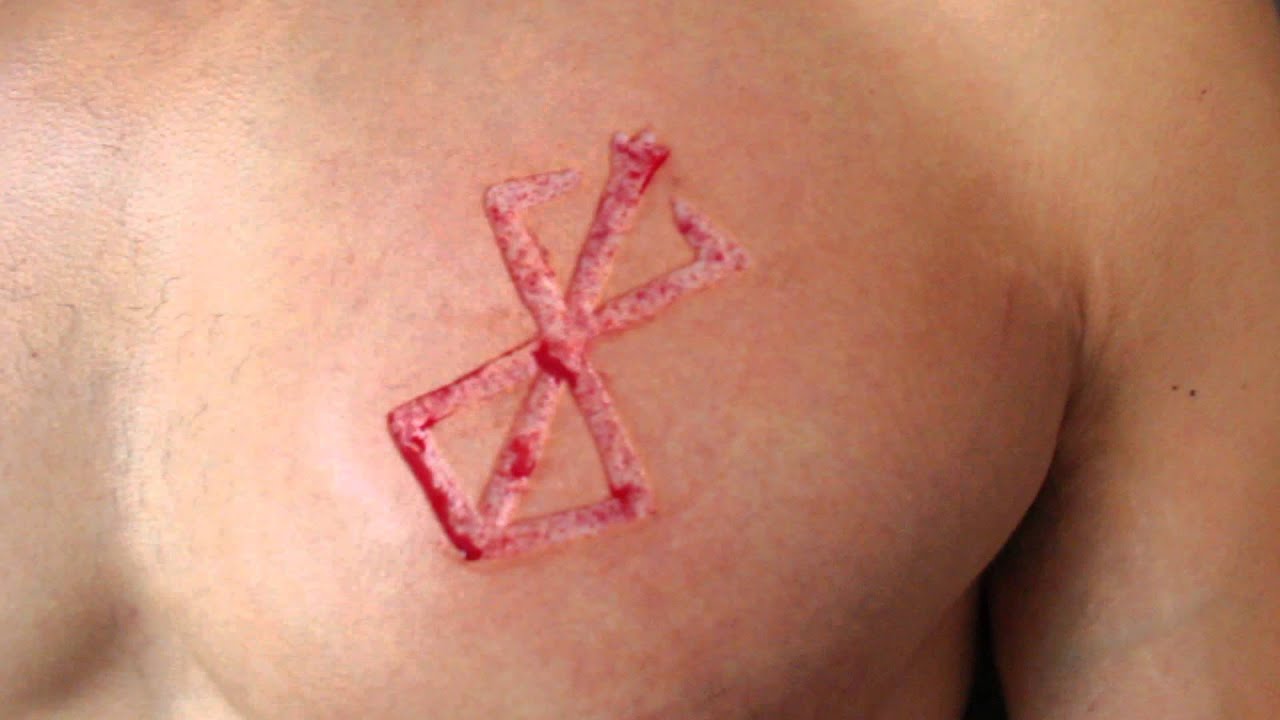
Although chemical scarification has been successful, it is not a modification that should be undertaken lightly. A potent understanding of physiology that is related to body modification will not suffice, as will a solid noesis of chemistry. Moreover, it is not almost every bit precise as other forms of scarification since the pattern must be simple enough to be blocked out in some grade on the trunk.
This is one of the most painful forms of modification that tin can be done, due to the hurting that slowly increases each fourth dimension the chemic reacts. In addition, since nerve ends are non destroyed rapidly (as is the case with branding), every moment of pain is felt to its fullest extent.
For those who do non understand every chemical term, concept, and formula in this description, information technology should go without saying they should Non attempt chemic scarification. Despite your understanding of the theory, you lot probably should not implement it; information technology is as well circuitous and provides too many possible sources of error to be an effective method of scarification – stick with branding and cut.
Does Chemical Scarification Hurt?

If a body modification procedure looks painful and sounds painful, that's because it is. The simple truth. The scar itself may be painful, but it is not the only painful part of the procedure. Even though a wound is painful, to begin with, the healing procedure tin can be every bit or even more painful than the original wound. After healing, there will be a variety of options, and each volition be dependent on personal preference.
The near important affair to call up when undergoing whatever form of body modification is to maintain personal hygiene and clean whatever open wounds to prevent infection.
The Healing Procedure

The healing method used to treat the wound will greatly touch how the scar will announced. Scarring is less likely to occur if a wound heals chop-chop. Therefore, many things can be washed to prolong the healing process to increment the total amount of scar tissue. If a wound is left open, information technology can be immune to dry out by the air. Following the formation of the scabs, they are then removed and the healing process is repeated. It is too possible for wet healing to prolong the healing procedure of wounds. Past applying cellophane or bandaging to the wound and keeping it moisturized, y'all can avoid infection. You tin can also scrub the wounds vigorously with brushes or rub them with common salt during the healing procedure, which will cease the growth of new cells and extend the time it takes for the wound to heal. In add-on to applying vinegar, lime and lemon juice, and iodine tinctures direct on the open up wound, y'all tin can as well encourage scarring by rubbing such products into the wound.
Source: https://bodyartguru.com/chemical-scarification/
0 Response to "All You Need to Know About Chemical Scarification"
Post a Comment